
Ring spun cotton is cotton yarn made by twisting and thinning the fibres again and again on a ring spinning frame. That slow, careful twisting produces a finer, stronger and smoother yarn than faster methods like open-end spinning. Knit that yarn into a tee and you usually get softer fabric with less fuzz and a nicer feel on the skin.
That’s why two cotton tees with the same “100% cotton” label can feel completely different in your hands. One feels smooth and cool. The other feels a bit rough, dry or “papery”. Most of the time, the difference comes down to how the cotton was prepared and spun, long before the tee was cut and sewn. Here’s how it works, in plain language.
From Cotton Plant to T-Shirt: The Short Version
To understand ring-spun cotton, it helps to see where spinning sits in the process.
- Cotton fibres are harvested and cleaned. Raw cotton is a fluffy mass of fibres in different lengths.
- Carding. Machines brush the fibres so they roughly line up, removing dirt and some tangles.
- Combing (optional). An extra step that removes short fibres and straightens the long ones.
- Spinning. The fibres are twisted into yarn. This is where ring-spun and open-end differ.
- Knitting. The yarn is knitted into fabric, usually jersey for tees.
- Dyeing, finishing, cutting and sewing. The fabric becomes your tee.
So “combed” and “ring-spun” describe two different steps. One is about preparing the fibres. The other is about turning them into yarn.
What Is Open-End Cotton?
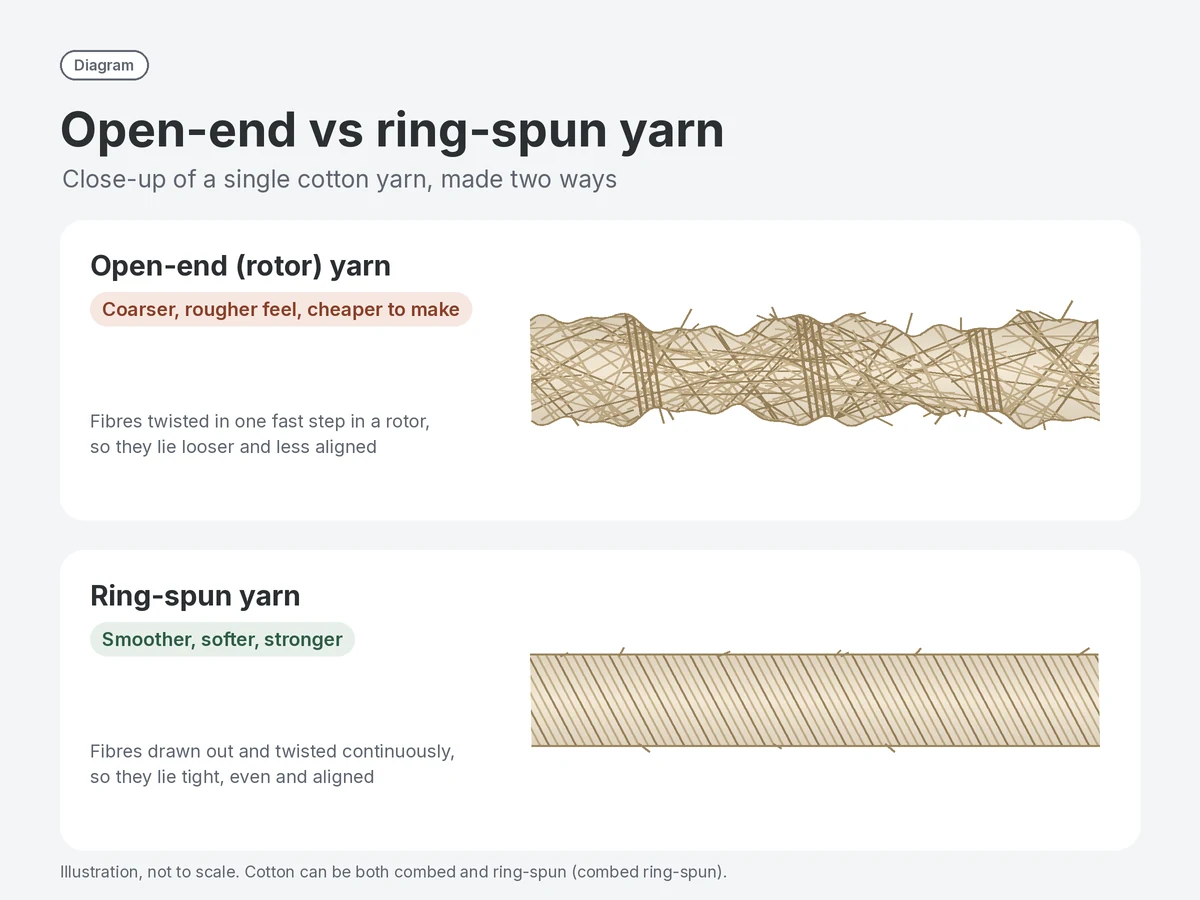
Open end cotton (also called rotor-spun) is made by feeding fibres into a fast-spinning rotor that twists them into yarn in one quick step.
It’s efficient and widely used, especially for budget and basic tees. But the fibres aren’t twisted as neatly, so the yarn tends to be:
- Coarser and a bit thicker
- Less smooth, with a drier or slightly rough hand feel
- Weaker than a ring-spun yarn of similar thickness
That doesn’t make open-end “bad”. It’s practical, and many plain tees, uniforms and event shirts use it. It just usually doesn’t feel as soft.
What Is Ring-Spun Cotton?
Ring spinning is the older, slower method. The fibres are drawn out and twisted continuously, getting thinner and tighter as they go. Think of rolling a long piece of dough between your hands until it’s thin and smooth.
The result is yarn that is usually:
- Finer and more even, which can make fabric look cleaner
- Smoother, with fewer loose fibre ends sticking out
- Stronger for its thickness, because the fibres are well twisted together
- Softer on the skin, which is the part most people notice
Ring-spun cotton takes longer to make, so tees using it often cost more. But for many people, the softer feel is worth it.
Ring Spun vs Combed Cotton: What’s the Difference?
This is the most common mix-up, so let’s clear it up. Ring spun vs combed cotton isn’t really an either/or choice.
- Combed describes fibre preparation. Short fibres are combed out before spinning, leaving longer, straighter fibres.
- Ring-spun describes the spinning method. Fibres are twisted carefully into a fine yarn.
A yarn can be:
| Type | Prep | Spinning | Typical feel |
|---|---|---|---|
| Carded open-end | Carded only | Rotor | Basic, a bit rough |
| Carded ring-spun | Carded only | Ring | Softer, some fuzz |
| Combed ring-spun | Carded and combed | Ring | Smooth, soft, refined |
| Combed (spinning not stated) | Carded and combed | Varies | Smoother than carded, depends on spinning |
Our Combed Cotton vs Regular Cotton guide goes deeper into the combing side, including why fewer short fibres means less fuzz and pilling.
Cotton Types for T-Shirts at a Glance
When you’re browsing cotton types for t shirts, here’s a quick cheat sheet:
- “100% cotton” tells you the fibre, not how it was prepared or spun.
- “Combed cotton” means short fibres were removed. Usually smoother.
- “Ring-spun cotton” means the yarn was spun with the ring method. Usually softer.
- “Combed ring-spun” means both. Often found in premium basics.
- “Heavyweight” or “250gsm” describes fabric weight, not softness. Read What Does 250gsm vs 260gsm Mean? for that side.
Weight, yarn and knit all work together. A heavy tee can be soft or rough. A light tee can be smooth or scratchy.
How Does Each Feel in Malaysian Heat?
This is the part that matters day to day. In our weather, a tee spends a lot of time against warm, slightly sweaty skin.
Softness when you sweat
Smoother yarn has fewer loose fibre ends, so it tends to feel less scratchy when your skin is damp. That’s one reason a soft t shirt in Malaysia makes such a difference by the end of a long, humid day.
Breathability
Here’s the honest part: spinning method alone doesn’t make a tee much cooler. Breathability depends more on:
- Fit. A looser tee lets air move.
- Fabric weight. Lighter fabric usually feels airier.
- Knit and colour. Open knits and lighter colours help in direct sun.
So a ring-spun tee won’t magically keep you cool, but it will usually feel nicer while you’re warm. If you’re wondering about heavier tees, see Is a Heavyweight Tee Too Hot for Malaysia?.
Long-term comfort
Smoother, stronger yarn often holds up better over many washes. It tends to pill less and keep a cleaner surface, so the tee still feels good months later, especially when washed cold and dried in the shade.
How to Spot a Softer Tee When You Shop
You won’t always see “ring-spun” on a label, especially with local brands. Here’s how to judge anyway.
Online
- Read the fabric description. Look for “ring-spun”, “combed” or “combed ring-spun”.
- Check reviews for words like “soft”, “smooth” or “rough”. Real buyers notice feel quickly.
- Look at close-up photos. A smooth, even surface usually means finer yarn.
In person
- Rub the fabric between your fingers. Smooth and slightly cool, or dry and rough?
- Look at it against the light. Fine, even yarn looks cleaner. Coarser yarn can look uneven or fuzzy.
- Check the surface. Lots of tiny loose fibres on a new tee can mean shorter fibres or coarser yarn.
For the full in-person routine, including collar and seams, see How to Spot a Quality T-Shirt in 30 Seconds.
Many big blank-tee makers, like Gildan and Bella+Canvas, list the yarn type for each style on their spec sheets, which is handy if you’re comparing basics. Our Gildan vs Comfort Colors vs Bella Canvas guide covers how those blanks compare in feel and weight.
What About Alpacco Tees?
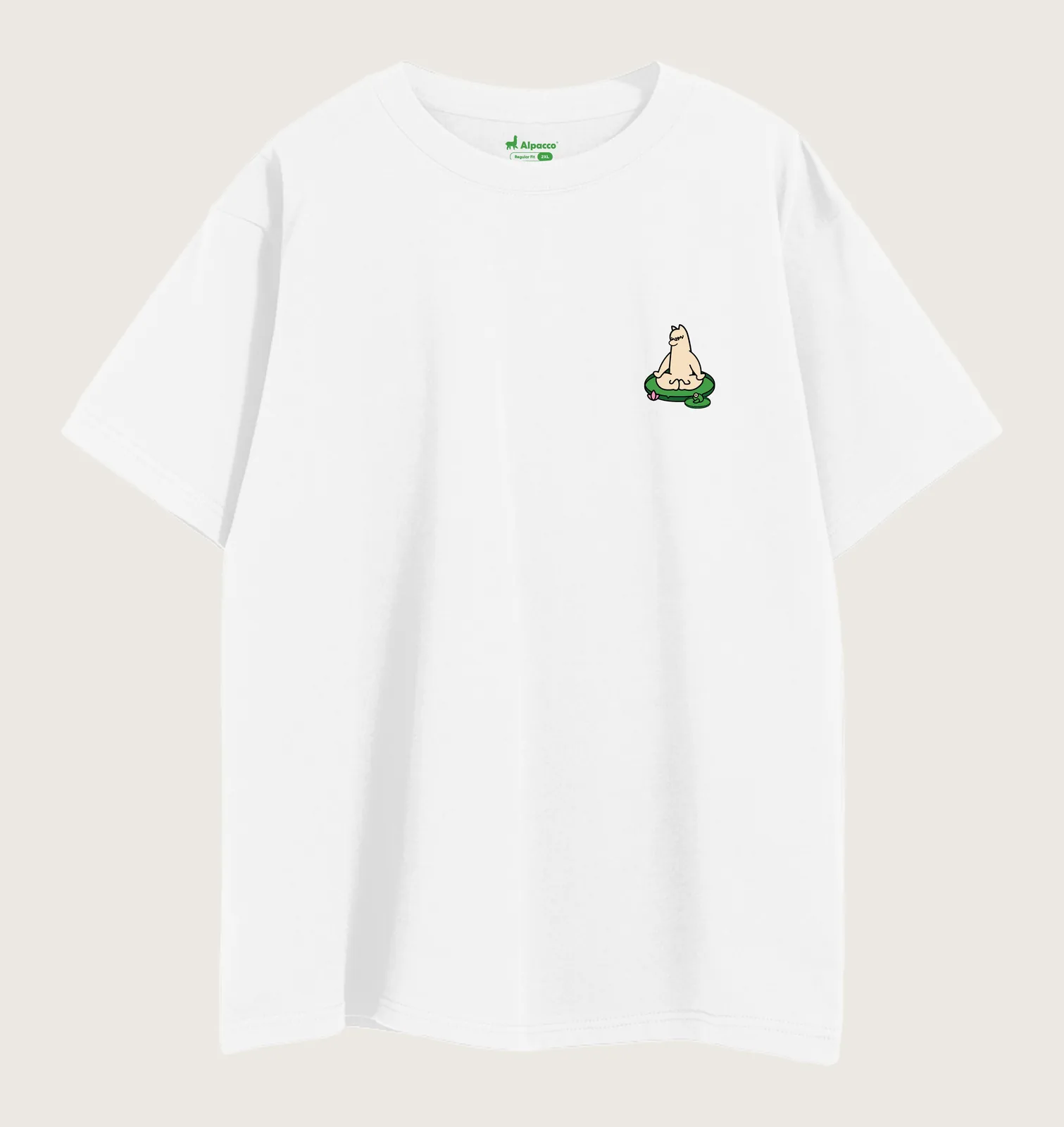
Our tees are made with combed cotton, from 230gsm to 260gsm, in oversized and regular fits. We describe them as combed cotton because that’s what we can tell you with confidence. We’re not labelling them ring-spun or open-end in this post.
What combed cotton means for you is covered in our combed cotton guide: fewer short fibres, a smoother surface and less fuzz over time. Combine that with a heavier weight and a relaxed fit, and you get a tee built for real Malaysian days, not just photos.
If you’d like to feel the difference for yourself, start with the MT Mood Tee on Shopee: 260gsm, oversized, drop shoulder. And if you have a specific question about the fabric of any Alpacco tee, message us on Shopee before you order and we’ll check for you.
Key Takeaways
Ring-spun cotton is yarn twisted slowly and tightly, making it finer, stronger and softer than fast open-end yarn. Combed cotton is about removing short fibres before spinning, and a tee can be both combed and ring-spun. Neither makes a tee much cooler on its own; fit and weight matter more. For softness, look for “combed” or “ring-spun” in the description, check reviews and feel the fabric.
FAQ
What is ring-spun cotton?
Ring-spun cotton is yarn made by twisting and thinning cotton fibres continuously on a ring spinning frame. This produces a finer, smoother and stronger yarn than open-end spinning. Tees knitted from ring-spun yarn usually feel softer and have less fuzz on the surface.
Is ring-spun cotton better than combed cotton?
They aren’t competitors. Combing removes short fibres before spinning, while ring spinning is a way of twisting fibres into yarn. A tee can be both, which is often called combed ring-spun. Both steps tend to make cotton smoother and softer than basic carded, open-end yarn.
What is open-end cotton?
Open-end, or rotor-spun, cotton is made quickly by twisting fibres in a fast-spinning rotor. It’s efficient and widely used for basic tees, but the yarn is usually coarser and less smooth than ring-spun. That’s why open-end tees can feel a little rough or dry to the touch.
Is ring-spun cotton cooler to wear in hot weather?
Not much on its own. Breathability depends more on fit, fabric weight and knit. Ring-spun cotton mainly feels softer and less scratchy on warm, sweaty skin. For a cooler tee in Malaysian heat, choose a looser fit and a weight that suits how you’ll wear it.
Are Alpacco tees ring-spun?
We describe our tees as combed cotton, from 230gsm to 260gsm, and aren’t labelling them ring-spun or open-end in this guide. Combed cotton gives a smoother surface with less fuzz. If you have a question about a specific tee’s fabric, message us on Shopee before you order.