
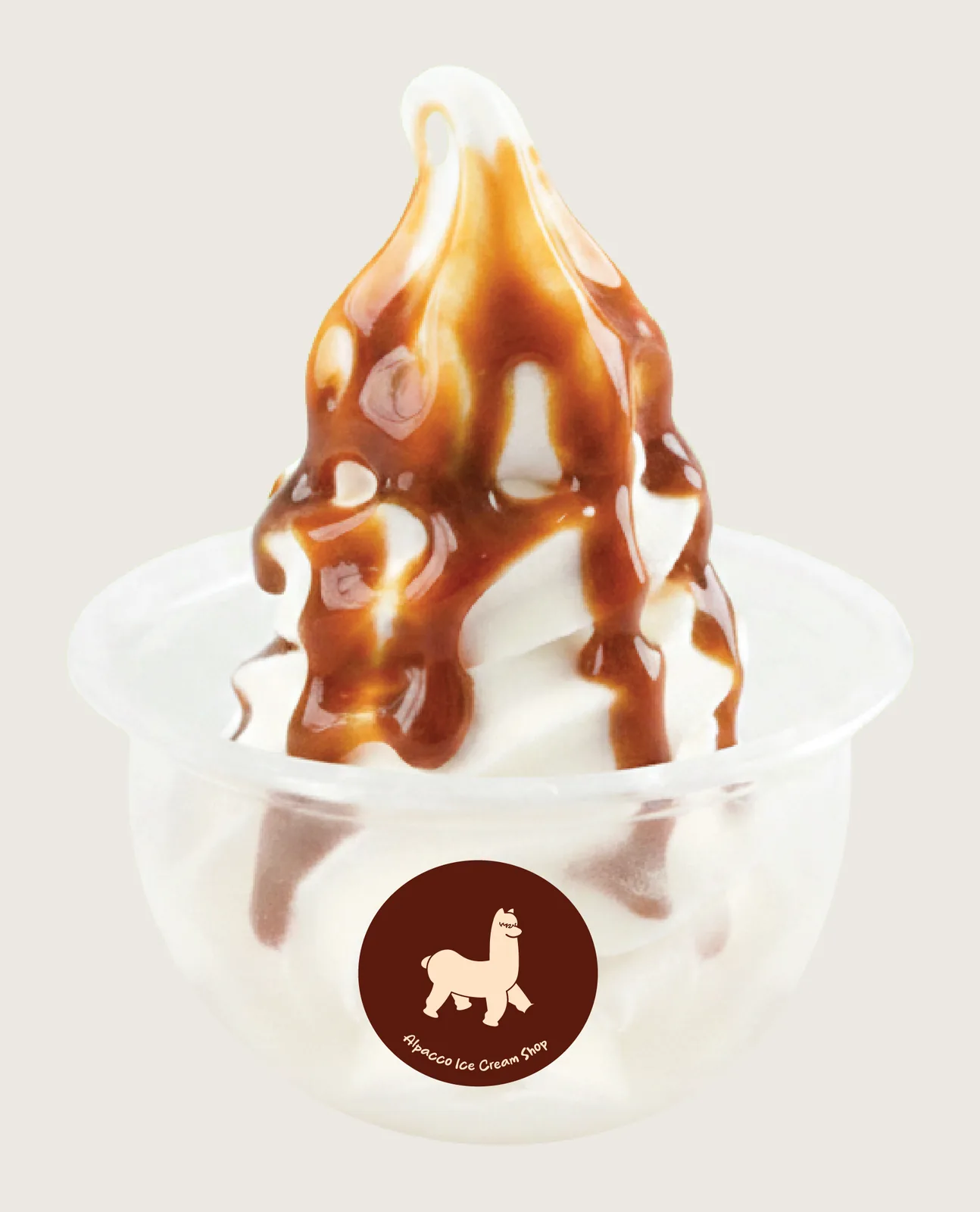
That perfect swirl has a story. Every day at our counter in Taman Desa Idaman, someone asks where soft serve came from, or why it feels different from the scooped ice cream they grew up with. Here is a short, fun history of soft serve, from its American roots to Malaysian kiosks, and how it ended up in a cup with gula melaka on top.
Ice cream before soft serve
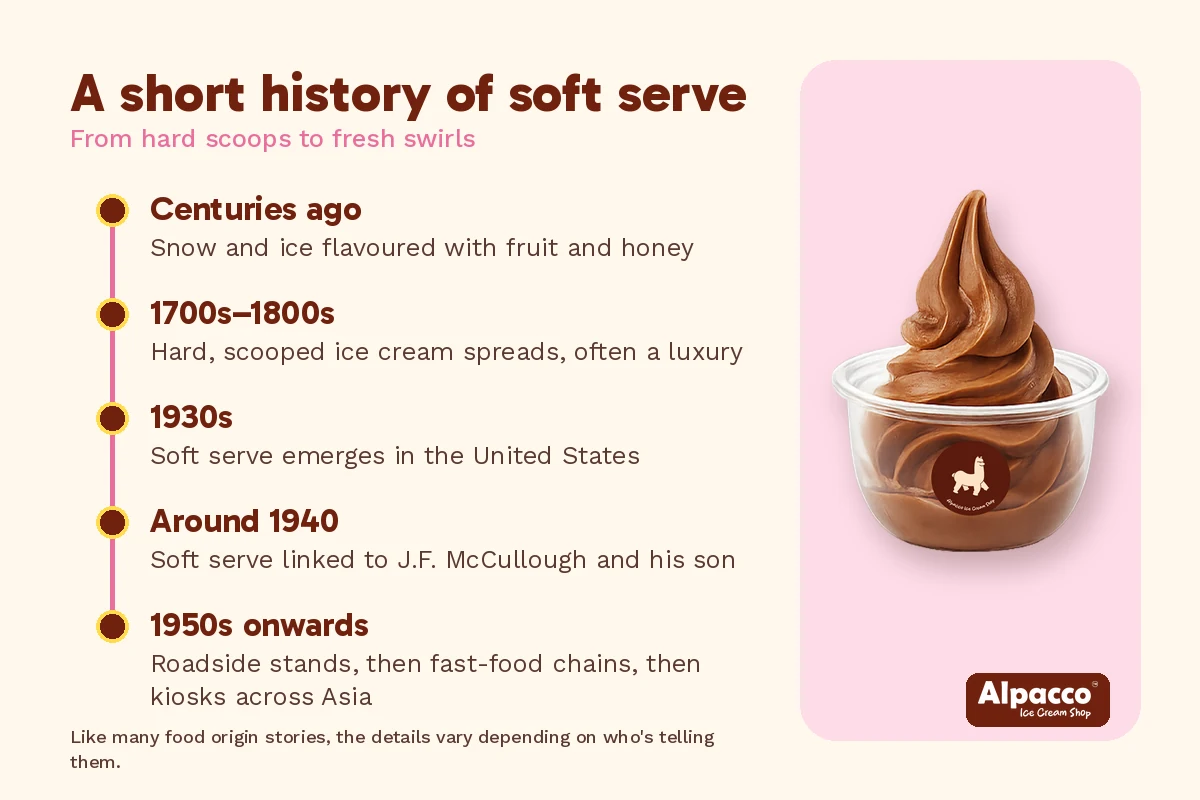
Frozen desserts go back centuries. Ancient cultures enjoyed snow and ice flavoured with fruit and honey. Ice cream as we know it developed in Europe and spread widely by the 1700s and 1800s. It was hard, scooped, and often a luxury reserved for people who could afford ice houses and special equipment.
For a long time, “ice cream” meant something dense and firm. You scraped it with a spoon. You did not watch it swirl out of a machine into a tall peak. That softer, airier style came later, and it needed a different kind of machine.
The birth of soft serve
Soft serve emerged in the United States in the 1930s. Two names come up most often:
- Tom Carvel, who, according to a popular story, had an ice cream truck break down in 1934 and found customers loved the softened ice cream he sold from the stranded van.
- J.F. McCullough and his son, whose soft-serve product is linked to the founding of Dairy Queen around 1940.
Like many food origin stories, the details vary depending on who is telling them. There is also a popular claim that Margaret Thatcher helped invent soft serve as a food chemist. Historians generally treat that as a myth or an exaggeration. Fun to repeat at the table. Not something we treat as settled fact.
What matters for the taste in your hand is simpler: someone figured out how to serve ice cream softer, colder-but-not-too-cold, and full of tiny air bubbles. That is soft serve.
The machine that changed everything
Soft serve depends on machines that freeze the mix while churning in air, then serve it straight away at a slightly warmer temperature than hard ice cream. That is what creates its light, smooth texture. Without the machine, you are back to scooped tubs and melting drama on a hot afternoon.
We get this question a lot at the shop: why does soft serve feel different from supermarket ice cream? Short answer: air, temperature, and serving style. Longer answer in Why Is Soft Serve So Smooth?.
Soft serve goes global
From the 1950s onwards, soft serve spread with roadside stands and, later, fast-food chains. Families in the US and elsewhere grew up treating a soft cone as a weekend ritual. The format travelled easily: one machine, a few flavours, a queue, a smile.
Across Asia, soft serve found its own personality. Japan in particular became known for creative seasonal flavours. In Japanese soft-serve culture and industry history, matcha and Hokkaido milk are famous examples of how local tastes shaped the swirl. That is Japan and the wider industry story, not our menu in Klang.
Elsewhere in the region, kiosks popped up in malls, night markets, and neighbourhood corners. Soft serve became the quick cold treat you grab after dinner, not only the American road-trip cone.
Soft serve in Malaysia
Many Malaysians’ first soft serve was a fast-food cone after a movie or a shopping trip. That swirl was usually vanilla, sometimes chocolate, and it dripped down your wrist in the car park. Sound familiar?
Today, soft serve kiosks around Malaysia offer flavours and toppings inspired by local desserts. At Alpacco, our soft serve flavours are:
- Milk (Farm Fresh)
- Belgium Chocolate
- Pistachio
- Soya (limited)
We do not sell Matcha soft serve. When people ask about green swirls they have seen online, they are usually thinking of Japanese soft-serve culture, or mistaking our Pistachio for something else. Pistachio is nutty and roasted. It is not matcha.
On top of those flavours, we lean into Malaysian toppings such as gula melaka and pulut hitam. That is how a global format becomes a Klang cup. More on the local angle in Local Malaysian Flavours on Soft Serve.
If you want the flavour-by-flavour tour, start with Farm Fresh Milk Soft Serve, Belgium Chocolate Soft Serve, or Pistachio Soft Serve in Klang. When Soya is on, see Soya Soft Serve.
Soft serve vs other frozen desserts
Soft serve is not gelato, and it is not hard-scooped ice cream. The differences come down to air, serving temperature, and how they feel on the tongue. We wrote a clear side-by-side here: Soft Serve vs Ice Cream vs Gelato.
In short: soft serve is lighter and smoother, served soft from a machine. That is why it melts faster in Malaysian heat, and why a cup often beats a cone on a hot afternoon. Practical tips for winning that race live in How to Eat Soft Serve Before It Melts.
Fun facts we like telling at the counter
- Soft serve has air churned in, which is part of why it feels light.
- The float (ice cream in soda) is even older than soft serve. If you like that idea, try our Sarsaparilla Cloud.
- Origin stories disagree. Carvel and Dairy Queen both matter in soft-serve folklore. That disagreement is part of the charm.
- Local toppings change the whole experience. The same Milk swirl tastes different with gula melaka than with KitKat. Ranking and textures: Soft Serve Toppings Ranked.
Visit Alpacco Ice Cream
- Where: Jln Laksamana 6, Taman Desa Idaman, 41200 Klang, Selangor. Directions on our Locations page.
- When: Usually open until 8:30pm; closed Tuesdays. Check @alpacco_icecream on Instagram for the latest hours.
- Menu: soft serve in Milk (Farm Fresh), Belgium Chocolate, Pistachio, and limited Soya, plus toppings, coffee, non-caffeine drinks, and the Cloud series. See the Ice Cream page.
- Muslim-friendly menu.
- Updates: follow @alpacco_icecream on Instagram.
Plan your visit on our Ice Cream page → Sundae Funday every day!
Key takeaways
Soft serve began in 1930s America (Carvel and Dairy Queen are the famous names), spread worldwide with machines and fast food, and today appears in Malaysia with local twists like gula melaka and pulut hitam. At Alpacco in Klang, the swirl means Milk (Farm Fresh), Belgium Chocolate, Pistachio, and limited Soya. Matcha belongs to Japanese soft-serve history and industry culture, not our current menu.
FAQ
Who invented soft serve?
Tom Carvel and the founders of Dairy Queen are the most commonly credited, though stories vary. Soft serve took shape in the US in the 1930s and early 1940s.
Did Margaret Thatcher invent soft serve?
This is a popular claim, but it is generally considered a myth or exaggeration. Fun dinner-table trivia. Not the settled history.
When did soft serve start?
In the 1930s in the United States, before spreading globally through stands and chains.
Why is soft serve soft?
It is served warmer than hard ice cream, with air churned in by the machine. That is also why it melts faster in our weather.
Does Alpacco sell Matcha soft serve?
No. Our soft serve flavours are Milk (Farm Fresh), Belgium Chocolate, Pistachio, and limited Soya. Matcha appears in this article only as part of Japanese soft-serve history, not as an Alpacco flavour.
Where can I get soft serve in Klang?
At Alpacco Ice Cream in Taman Desa Idaman. We are usually open until 8:30pm and closed on Tuesdays. Check Instagram before you come.