
Want to remove sweat stains from a white shirt before they set yellow? Act sooner rather than later: rinse the underarm area with cold water, then try a baking soda paste or a diluted white vinegar dab, wash as usual, and air-dry to check. Heat from a dryer can make the mark harder to shift. These are common home tips, not a guaranteed fix, especially on old stains.
If you live in Malaysia, you already know the problem. A light tee looks fresh at 9am, and by lunch the underarms are telling a different story. It happens after a walk to the car, a packed LRT ride, or a weekend at the mamak. Here’s why those marks form, what often helps at home, and how to prevent them — including when a darker or earth-tone tee is simply easier.
Why Light Tees Show Marks So Easily
White and pale cotton shows marks easily. Sweat, leftover deodorant, a bit of oil from skin: all of it has somewhere visible to sit. On a black or earth-tone tee, the same build-up is often there. You just don’t see it as quickly.
The marks people hate most aren’t usually fresh sweat, which is mostly water and often dries clear. They’re the ones that appear after a few wears and washes, sitting in the underarm as a pale yellow or grey patch. That’s a build-up problem, not a one-day spill.
Yellow Armpit Stains: What Causes Them
They’re a common mix of a few things, not just “sweating too much”.
A widely known cause is leftover antiperspirant. Many antiperspirants use aluminium salts to help reduce sweating. When those salts sit on fabric and mix with sweat, they can contribute to a yellow mark over time. Not every deodorant uses aluminium, and not every formula behaves the same way, so this isn’t a reason to panic about a particular product. It’s just a useful clue: the stain is often sweat plus residue, not sweat alone.
Other things can add to it:
- Not letting deodorant dry before you put the tee on, so it transfers straight onto the fabric.
- Wearing the same light tee for a long, hot day, then leaving it in the laundry basket.
- Washing in water that’s too hot, or putting the tee in the dryer while a mark is still there, which can set it.
- Detergent or leftover product that isn’t fully rinsed out of the underarm, leaving a dingy patch.
We can’t tell you which of these is “your” cause, and we won’t pretend we tested a row of brands in a lab. The practical takeaway is simpler: treat the underarm early, and don’t cook the stain with heat.
How to Remove Sweat Stains From a White Shirt
These are the methods most people try at home. Work on a clean surface, test anything first on a hidden spot (the inside hem is a good one), and read the care label. If the tee has a print, keep pastes and vinegar off the graphic.
First: rinse and loosen
- Turn the tee inside out and rinse the underarm with cold water, from the back of the fabric if you can.
- Gently work the area with your fingers. Don’t scrub hard, which can rough up the cotton.
- Don’t put it in a hot dryer if you can still see a mark.
If the stain is fresh, a cold rinse plus a normal wash sometimes does the job on its own.
Baking soda paste
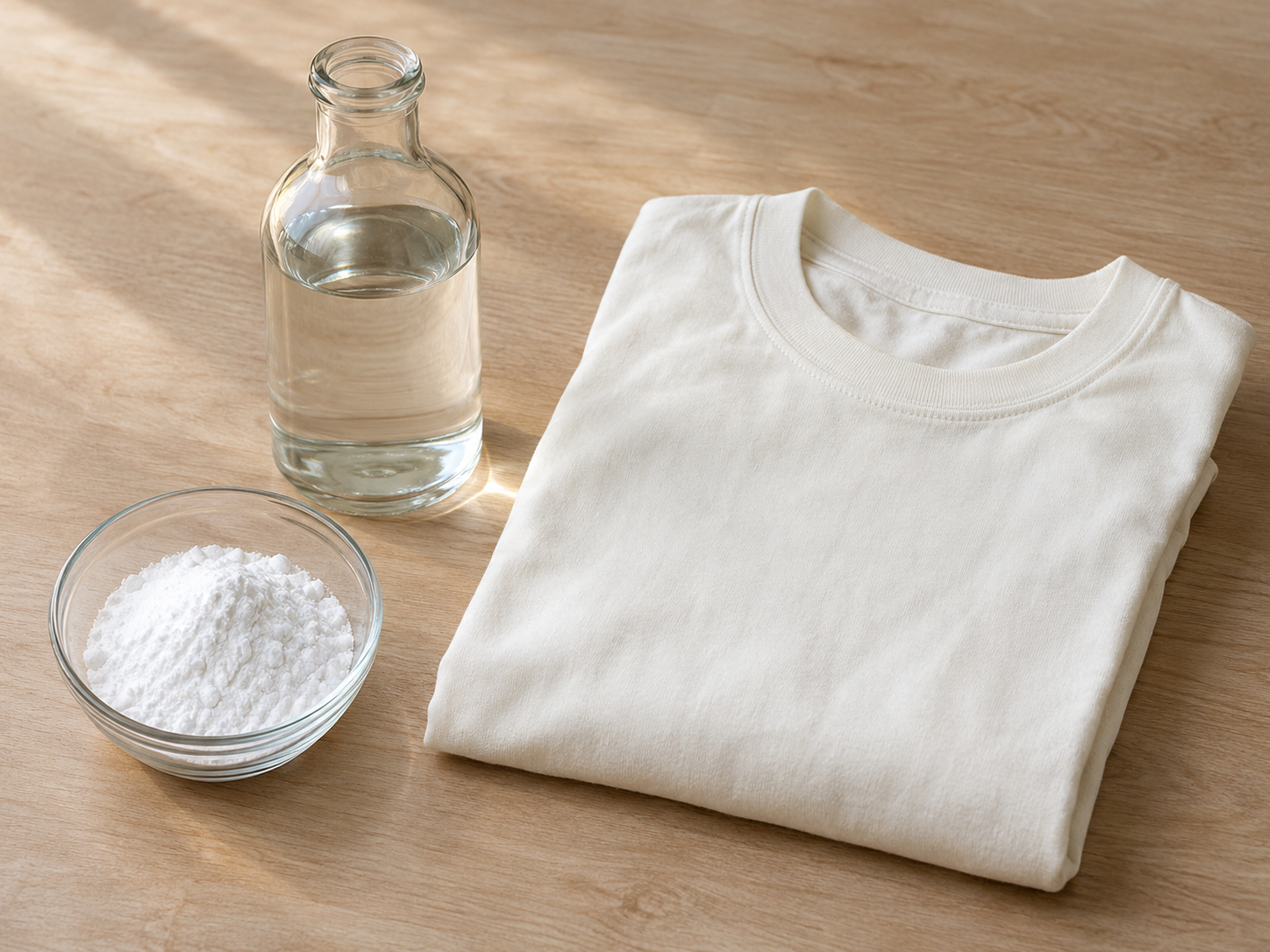
A baking soda paste is a popular first treatment for underarm marks.
- Mix baking soda with a little water to make a spreadable paste.
- Put it on the stain, on the inside of the tee if possible.
- Leave it for 30 minutes to an hour, keeping it off any printed area.
- Rinse thoroughly with cold water, then wash as usual.
- Air-dry and check before using any heat.
Baking soda is mild, which is why people start here. It may lighten a stain. It may not shift an old, set one in a single go. Repeating once is reasonable. Scrubbing five times in a row is how fabric starts to look worn.
Diluted white vinegar
White vinegar is the other common kitchen option. Use it diluted, not neat.
A simple mix is one part white vinegar to two parts water. Dab it onto the stain, let it sit for 15 to 30 minutes, then rinse and wash. As always, test a hidden area first, and keep it off prints and any trims you’re unsure about.
Results vary. Vinegar can help with odour and with some residue, but it isn’t a guarantee. Never mix vinegar with bleach. Rinse thoroughly before using any other treatment.
White deodorant marks
Not every underarm mark is yellow. Sometimes you get a chalky white smear from deodorant that has just transferred onto the fabric. Deodorant stain removal in that case is usually simpler: let the product dry on your skin next time, and for the tee, let the white smear dry, then brush or rinse it before washing. A dried white streak often comes out in a normal wash.
What Usually Doesn’t Help
- Hot water first on a set stain, or a hot dryer “to get it over with”. Heat can lock the mark in.
- Rubbing the underarm hard with a brush. You’ll wear the fabric and may make the area look fuzzy.
- Chlorine bleach on a printed tee. It can damage or fade the graphic. Even on a plain white shirt, follow the label and use it sparingly, if at all.
- Expecting a year-old stain to vanish in one wash. Older yellow patches are stubborn. You can often improve them. You may not fully erase them.
If you’ve tried two careful rounds and the mark is still there, it’s okay to stop. The tee can still be worn at home or on weekends. A perfect underarm isn’t worth damaging the cotton.
Kesan Peluh Baju: Langkah Ringkas
Untuk pembaca yang lebih selesa dengan Bahasa Melayu, ini cara ringkasnya:
- Bilas bahagian ketiak dengan air sejuk secepat mungkin, dari belakang kain jika boleh.
- Cuba pes baking soda (baking soda campur sedikit air), biarkan 30–60 minit, kemudian bilas.
- Atau sapu cuka putih yang sudah dicampur air (lebih kurang satu bahagian cuka, dua bahagian air), bilas, dan basuh seperti biasa.
- Keringkan secara semula jadi dahulu dan periksa. Jangan masukkan ke dalam pengering panas jika kesan masih ada.
Tiada jaminan noda lama akan hilang sepenuhnya. Uji pada bahagian tersembunyi dulu, dan jauhi kawasan cetakan.
Prevention: Simple Habits That Help
Removal is useful. Prevention is easier, especially if you wear light colours often.
- Let deodorant dry before the tee goes on.
- Don’t over-apply. A thin layer that dries is less likely to dump product onto the fabric.
- Rinse or wash sooner after a very sweaty day, instead of leaving the tee in a pile.
- Wash the underarm area a little more attentively, but still gently, and use cold or cool water when you can.
- Air-dry and check before any tumble dryer. A low-heat cycle is a backup, not the first choice while a mark is visible.
- Give light tees a rotation. Wearing the same pale shirt all week in this weather is how build-up starts.
A strategy for hot days
A hot weather tee can be a light colour, and that’s fine if you like it. It just needs a little more attention. In our climate, many people find it easier to keep a mix: a few pale tees for when they want them, and some darker or earth-tone ones for long, sweaty days, commute days, or anything involving a lot of walking.
That isn’t a fashion rule. It’s a laundry one. Darker shades can make underarm build-up less visible, though they still need washing and care. If you’re building a small, useful wardrobe, Best T-Shirt Colours: Building a Black, White and Earth-Tone Wardrobe is a good place to start. And if you already rely on black tees, How to Keep Black Clothes From Fading covers how to wash and dry them so they stay looking dark.
For a different clothing stain, see our guide to removing coffee stains from a white shirt. Underarm marks can build up more slowly than a single spill.
A Quick Word on Fabric
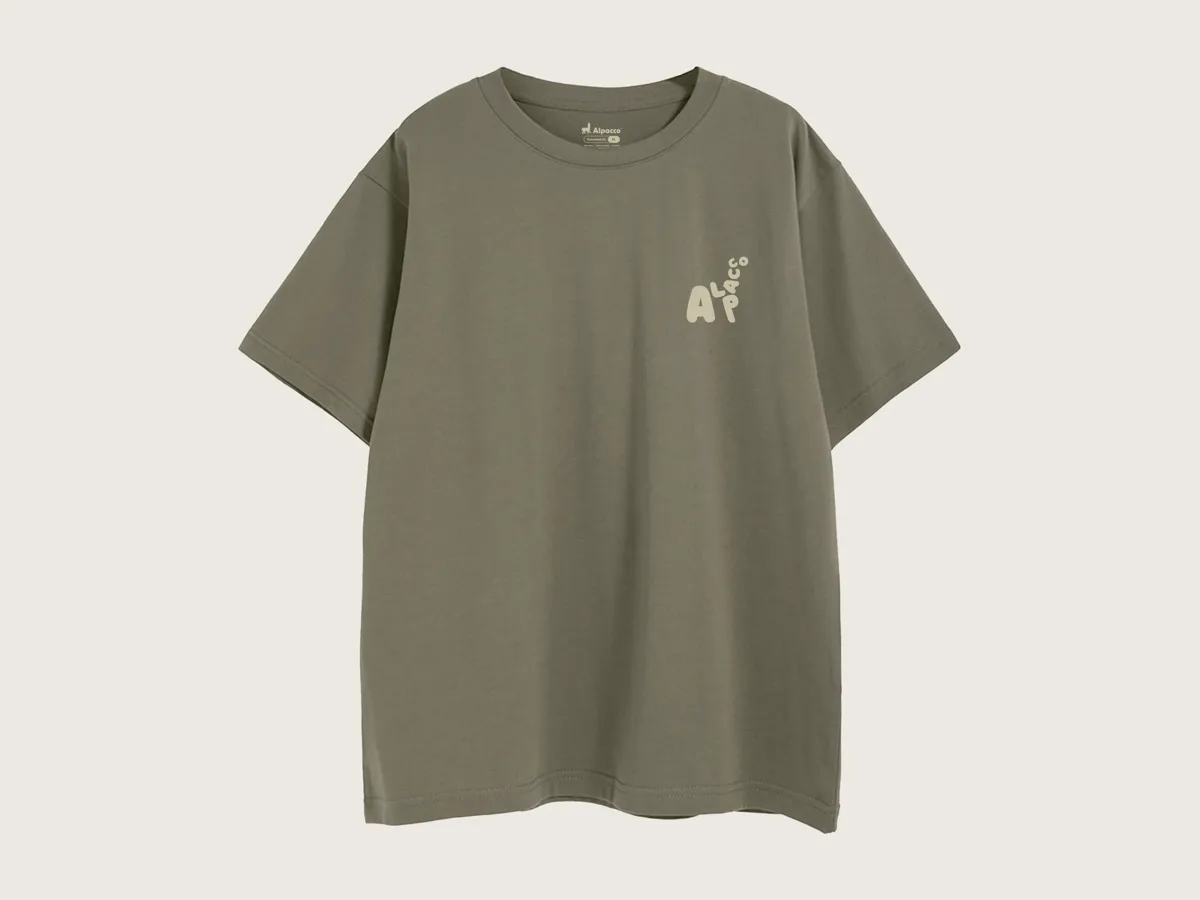
Our tees are combed cotton, 230–260gsm. Whatever the fabric weight, be gentle, test first, and don’t scrub the underarm. Follow the care label on the garment you own. We won’t claim our tees never stain, or that any colour we make is immune. If you’re choosing a new everyday tee, pick the colour you’ll actually maintain.
Key Takeaways
To remove sweat stains from a white shirt, rinse with cold water, then try a baking soda paste or diluted white vinegar, wash as usual, and air-dry to check. Yellow underarm marks often come from sweat plus leftover antiperspirant, not from sweat alone. Heat can set the stain, old marks may not come out fully, and prevention — letting deodorant dry, washing sooner, and keeping some darker or earth-tone tees for the hottest days — does more than any single kitchen trick.
FAQ
How do I remove sweat stains from a white shirt?
Check the care label and test a hidden area first. Rinse the underarm with cold water, then apply a baking soda paste for 30 to 60 minutes, or dab on diluted white vinegar (one part vinegar to two parts water) for 15 to 30 minutes. Keep treatments off prints. Rinse thoroughly, wash as usual, and air-dry to check. Repeat once if needed, and keep heat away until the mark is gone.
Why do yellow stains appear under the arms?
They’re often a mix of sweat and leftover antiperspirant, including aluminium salts used in many formulas, plus heat and time in the fabric. Fresh sweat can dry clear; the yellow patch usually builds up over wears and washes. Letting deodorant dry before you dress can reduce how much product hits the tee.
Does baking soda or vinegar work better?
It depends on the stain, and neither is guaranteed. Baking soda is a mild first try. Diluted white vinegar is another option, especially if there’s leftover residue or odour. Check the care label, test a hidden area first, rinse thoroughly between treatments, never mix vinegar with bleach, and stop if the fabric starts to look worn.
Can I put a stained tee in the dryer?
Wait until you’ve checked the mark. A hot dryer can set a sweat stain and make the next treatment less effective. Air-dry first. If the underarm looks clean after washing, you can dry as you usually would, ideally on a low heat or on the line.
What’s the easiest way to prevent sweat stains on light tees?
Let deodorant dry, don’t over-apply, and wash sooner after very sweaty days. Keep a few darker or earth-tone tees for long, hot days, when a pale shirt will show build-up faster. Prevention won’t make you sweat less. It just gives the marks less chance to settle.