
T shirt pilling happens when short, loose fibres on the fabric surface get rubbed, tangle together and form tiny balls. Friction is the trigger: bag straps, seatbelts, sofa cushions, the washing machine. Short fibres and fibre blends make it worse. You can remove pills with a fabric shaver or a fabric comb, and prevent most of them by washing gently and choosing smoother cotton.
If you’ve ever looked down at a tee you loved and noticed a fuzzy patch of little bobbles under the arm or across the belly, that’s pilling. In Malay we just call it baju berbulu. It doesn’t mean the tee is ruined. It means friction has been busy. Here’s why it happens, how to fix it, and how to keep your next tee smoother for longer.
What Causes T-Shirt Pilling?
Pills form in three simple stages:
- Fibres work loose. Rubbing pulls the ends of short fibres out of the yarn, so they stick up from the surface.
- They tangle. More rubbing twists those loose ends together into tiny knots.
- They stay attached. The little ball stays anchored to the fabric by a few fibres, and you see a pill.
Friction: the main trigger
Pills show up where your tee gets rubbed most:
- Under the arms, where your arms brush your sides all day
- Across the stomach, from desks, counters and seatbelts
- On the shoulders and back, from backpack and bag straps
- On the sides, from sling bags rubbing as you walk
- On the bum and back of the hem, from car seats and chairs
If your pills are concentrated in one place, look at what touches that spot every day.
Short fibres
Cotton fibres come in different lengths. Short fibres have fewer places to anchor into the yarn, so they work loose more easily. That’s why some cotton tees fuzz quickly and others stay smooth for a long time.
Washing and drying
Washing machines create a lot of friction. Long cycles, overloaded drums, and washing tees with towels, jeans or anything with zips all speed up pilling. Hot tumble drying adds even more tumbling and rubbing.
Fibre blends
Tees that mix different fibres can pill in a particularly stubborn way. More on that below.
Cotton vs Polyester Pilling: What’s the Difference?
Cotton vs polyester pilling is a common question, because they behave differently.
| 100% cotton | Polyester or poly-cotton blend | |
|---|---|---|
| Do they pill? | Yes, especially if fibres are short | Yes, often noticeably |
| How long pills stay | Cotton fibres are weaker, so pills often break off on their own over time | Polyester fibres are strong, so pills tend to stay attached |
| Look | Soft, fuzzy patches | Firmer, more visible bobbles |
| What helps | Smoother, longer-fibre cotton and gentle washing | Gentle washing; removing pills regularly |
In simple terms: cotton pills can come and go, while polyester pills tend to hang around. Blends can get the worst of both, because cotton fibres work loose and stronger polyester fibres hold the pills in place.
Why Combed Cotton Pills Less
Combed cotton goes through an extra step before spinning that removes many of the short fibres and keeps the longer, straighter ones. Fewer short fibres means fewer loose ends to tangle into pills.
That doesn’t make combed cotton pill-proof. Friction still wins eventually. But as we explain in Combed Cotton vs Regular Cotton, combed cotton is less prone to pilling than regular carded cotton, and it keeps a smoother surface for longer.
A related clue: if a new tee already sheds a lot of fluff in the first wash or feels quite fuzzy straight out of the bag, it may have more short fibres. That’s not always a dealbreaker, but it can mean pilling sooner.
How to Remove Pilling From a T-Shirt
Here’s how to remove pilling safely, from gentlest to most effective.
1. Lint roller or tape
Good for loose fuzz and light pilling. Roll or pat it over the area. It won’t remove firmly attached pills, but it’s quick and safe for any tee.
2. Fabric comb or de-pilling brush
A small comb with fine teeth that you brush lightly across the fabric. It catches pills and lifts them away. Work in one direction with gentle pressure.
3. Fabric shaver
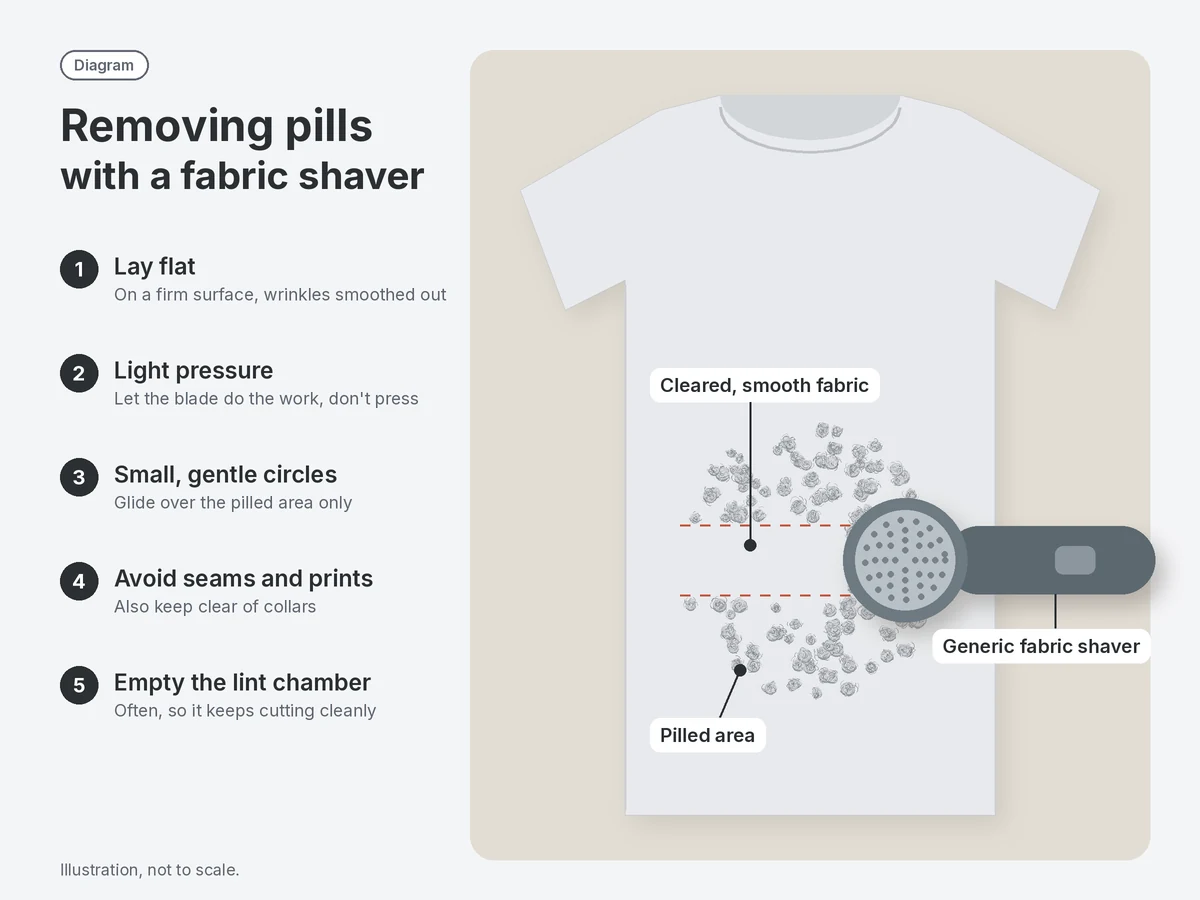
A fabric shaver (also called a de-piller or lint remover) is a small, usually battery-powered device with a rotating blade behind a mesh guard. It’s the most effective option for heavier pilling.
How to use one safely:
- Lay the tee flat on a firm surface, like an ironing board or table.
- Smooth out wrinkles. Never shave over folds or seams.
- Move in small, gentle circles. Don’t press hard.
- Avoid prints, seams and collars. The blade can catch and damage them.
- Empty the lint compartment often so it keeps cutting cleanly.
4. A razor (carefully)
Some people use a clean disposable razor, gliding it lightly over the fabric. It works, but it’s easy to cut the fabric. If you try it, go slowly, use very light strokes and test on a hidden area first.
What not to do
- Don’t pull pills off with your fingers. You’ll pull more fibres loose and make it worse.
- Don’t use scissors on large areas. Fine for one stray pill, risky for a whole patch.
- Don’t shave over prints. Treat graphics gently, as you would when washing.
How to Prevent Pilling
Prevention is easier than removal. These habits help any tee.
In the wash
- Turn tees inside out. The outer surface stays protected from rubbing.
- Wash similar fabrics together. Keep tees away from towels, jeans and anything with zips or velcro.
- Close zips and fasten hooks on other clothes.
- Use a gentle cycle and cold water. Less agitation, less friction.
- Don’t overload the drum. Clothes should move freely, not grind against each other.
- Try a mesh laundry bag for tees you really care about.
Our full routine is in How to Wash a Cotton Tee So Prints and Colour Last.
In the dryer (or not)
- Air-dry in the shade when you can.
- If you use a dryer, choose low heat and take tees out while slightly damp.
- Avoid long, hot dobi dryer cycles for your favourites.
In daily wear
- Watch your bag straps. Switch shoulders, or use a bag with a smoother strap.
- Rotate your tees. Wearing the same tee every day concentrates the friction.
- Be mindful of rough surfaces, like textured car seats or brick walls you lean on.
Shopping Tips: How to Pick a Tee That Pills Less
You can’t always tell from a photo, but these clues help:
- Look for “combed cotton” in the description. It usually means fewer short fibres.
- Feel the surface. Smooth and even is better than fuzzy or hairy.
- Read reviews mentioning washing. Buyers often say if a tee pilled after a few washes.
- Check the fibre content. If you dislike stubborn pills, be aware that blends can hold onto them.
- Consider weight. Fabric weight isn’t the same as pill resistance, but a well-made heavier tee has more body. Read What Does 250gsm vs 260gsm Mean? to understand the numbers.
For a full checklist of what to look for before you buy, see How to Spot a Quality T-Shirt in 30 Seconds.
What About Alpacco Tees?
Our tees are made with combed cotton, between 230gsm and 260gsm. That means the advantages above apply: fewer short fibres and a smoother surface. Like any cotton tee, they’ll still pill in spots that get a lot of friction, so the washing and wear tips here apply to ours too.
If you want a heavier, smooth everyday tee, start with the MT Mood Tee on Shopee: 260gsm, oversized, drop shoulder.
Key Takeaways
T-shirt pilling happens when friction pulls short, loose fibres out of the fabric and tangles them into tiny balls. Cotton pills often break off over time, while polyester pills tend to stay. Remove them with a lint roller, fabric comb or fabric shaver, working gently and avoiding prints. To prevent pilling, wash inside out on a gentle cycle, skip hot dryers, and choose combed cotton.
FAQ
Why does my t-shirt pill so quickly?
Usually it’s friction plus short fibres. Bag straps, seatbelts, desks and the washing machine rub loose fibre ends into little balls. Tees with more short fibres, or blends with polyester, tend to pill faster. Washing inside out on a gentle cycle and choosing combed cotton both help.
How do I remove pilling from a t-shirt without damaging it?
Lay the tee flat and use a lint roller for light fuzz, a fabric comb for small pills, or a fabric shaver for heavier pilling. Move gently in small circles, avoid seams, collars and prints, and never pull pills off with your fingers, which loosens more fibres.
Does cotton pill less than polyester?
Both can pill. Cotton fibres are weaker, so cotton pills often break off on their own over time, while strong polyester fibres hold pills in place, making them more visible. Blends can pill stubbornly because cotton fibres work loose and polyester keeps the pills attached.
Does combed cotton pill?
It can, but it’s less prone to pilling than regular carded cotton. Combing removes many of the short fibres that work loose and tangle, so the surface stays smoother for longer. Friction from bags and rough washing can still cause some pills over time.
Is a fabric shaver safe for t-shirts?
Yes, if you use it gently. Lay the tee flat, smooth out wrinkles, move in small circles without pressing hard, and keep away from seams, collars and printed graphics. Test on a hidden spot first if you’re unsure, and empty the lint compartment often.